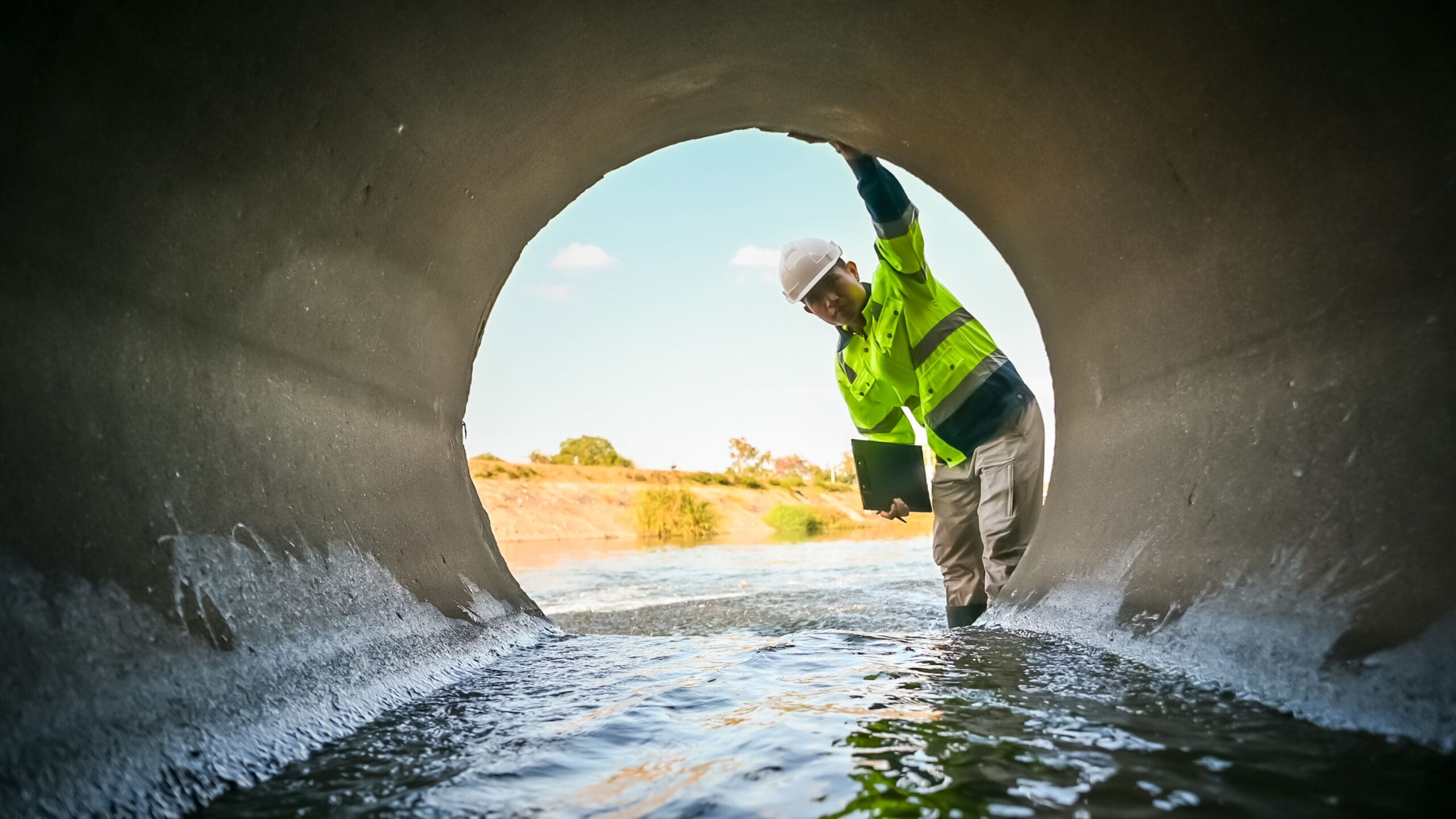

Water utilities managing aging infrastructure, workforce transitions, and tightening compliance requirements need more than disconnected spreadsheets and paper records. When asset data, work orders, and field updates live in separate systems, decisions slow down, reporting becomes manual, and field crews operate without a complete picture. GIS-based asset management software gives utility teams a map-first, real-time view of field data, work orders, and asset records, closing the gap between the field and the office and building the data foundation that water network management depends on.
The average US water main is more than 45 years old, and pipes laid during the postwar boom are approaching the end of their design life just as EPA compliance requirements tighten, lead service line inventory mandates expand, and a workforce where more than 30 percent of employees are within five years of retirement. Managing all of it is difficult when field data, work orders, and GIS records live in separate systems that rarely interact. That’s the problem a GIS-based asset management platform is built to solve.
Why Water Utility Asset Management Is Getting Harder
Aging infrastructure is the most visible pressure point. Deteriorating mains require more frequent inspections and more detailed documentation, at the same time experienced crews are retiring. When those crews leave, they take decades of institutional knowledge with them: which valves are temperamental, which mains have a history of leaks, which neighborhoods have the oldest service lines. Without a system that captures that knowledge, the next generation of field technicians is forced to rebuild that understanding over time.
Regulatory demands compound the pressure. Utilities must demonstrate not just that work was completed, but that it was completed correctly, on schedule, and with a full documentation trail. That process becomes time-consuming and error-prone when data is scattered across paper logs, disconnected spreadsheets, and GIS systems that are updated after the fact, leaving compliance teams to assemble reports manually from multiple sources.
What GIS-Based Asset Management Actually Looks Like
The shift to GIS-based asset management isn’t just a technology upgrade; it’s a change in how information flows through the organization. A map-first asset management platform creates a single, continuously updated record that field crews and operations staff share in real time. For water utilities, the most impactful capabilities cluster around four areas
- Offline-capable mobile data collection. Field crews working near buried mains or remote pump stations often operate without reliable connectivity. A platform that functions fully offline, and syncs automatically when connectivity returns, ensures inspections are documented without gaps or duplicate entry.
- Real-time sync between field and GIS. When a technician updates an asset record in the field, that change should be reflected in the system immediately, not 48 hours later when it’s no longer useful for scheduling or compliance reporting.
- Configurable workflows for water-specific tasks. Hydrant inspections, valve exercising, leak surveys, and main break response all have different data requirements. A map-first platform that lets operations teams build and modify those workflows without custom development can adapt to a utility’s unique needs.
- Protection for your existing GIS investment. Platforms that integrate cleanly with ArcGIS Online, ArcGIS Enterprise, and the Esri Utility Network preserve what utilities have already built. For utilities migrating from legacy systems like GE Smallworld or Hexagon, tools like EpochSync Pro handle data synchronization that would otherwise require months of manual effort.
What Your GIS Team Should Pressure-Test
Platform evaluations should reflect how your operations actually funtion, not how a vendor demo is configured. Focus on the conditions your team deals with every day. Here are some critical questions to ask:
- Does it work offline reliably? Ask how the platform handles data conflicts when field devices reconnect after an extended offline use.
- Will my field crews actually use it? A map-first interface that surfaces relevant GIS data at the job site is the difference between a tool that gets used and one that gets worked around.
- How well does it integrate with existing the systems? Confirm how it connects to GIS, EAM or ERP platforms, and legacy data sources without creating duplicate data environments?
How Connected Data Changes Operational Decisions for Water Utilities
When field data flows in real time, maintenance scheduling shifts from reactive to predictive, compliance reporting becomes a byproduct of normal operations rather than a quarterly scramble, and a single dashboard replaces the manually assembled reports that currently consume operations staff time.
Connected data also addresses one of the most underappreciated risks in water utility operations: knowledge loss at retirement. A GIS-based platform that captures asset history, inspection records, and maintenance patterns as part of daily work preserves that institutional knowledge in the system, making it accessible to the next crew without a formal handoff.
Dominion Energy, which serves approximately 6 million customers across 15 states, implemented EpochField specifically to solve this problem. Transmission line workers had been manually downloading large mapping files and struggling to access reliable GIS data in the field, particularly in rural areas with unreliable Internet connectivity. After deploying EpochField’s map-first mobile platform, crews can now access up-to-date asset records and access road information on their phones and tablets, online or offline.
“Our line workers like that the EpochField application is basically in their pocket, available on their phone,” said Matthew Rogers, supervisor of electric transmission lines operations at Dominion. The utility is now extending EpochField further, integrating it with its SAP enterprise system to bring 80 years of asset history directly into field inspection workflows.
See It in Action at AWWA ACE26 in Washington, D.C.
The Epoch Solutions Group team will be at the American Water Works Association (AWWA)’s Annual Conference & Exposition (ACE), June 21–24, 2026, to talk through these challenges with water utility professionals. Stop by booth #969 to see EpochField and EpochSync Pro in action, or schedule a demo before the show so we can make the most of your time in D.C.
See How EpochField Modernizes Water Utility Asset Management
Not making the trip to ACE26? Contact us to explore how our map-first solutions are helping water utilities modernize field operations, close the gap between GIS and the field, and build the data foundation that compliance and capital planning depend on.


About Water Utility Asset Management Software
Water utility asset management software connects field data, GIS records, and work orders in a single system. It enables water utility teams to track asset conditions, schedule inspections, document maintenance, and meet compliance requirements, replacing paper-based processes with real-time, auditable data that operations and GIS teams can act on immediately.
GIS asset management software overlays asset records, inspection history, and work orders directly onto a map of the water network. Field crews arrive at job sites with accurate, current data on their mobile device. Operations managers gain a real-time view of network status without waiting for end-of-day reports, improving scheduling, maintenance prioritization, and emergency response across the distribution system.
Prioritize offline capability, configurability, and integration with your existing GIS. Water utility management software should work reliably where cell service is unavailable, adapt to water-specific workflows like hydrant inspections and valve exercising without custom development, and connect cleanly to platforms like ArcGIS or legacy systems like GE Smallworld, without requiring duplicate data management across multiple systems.
Digital transformation in utilities means replacing manual, paper-based field processes with connected, data-driven systems. For water utilities, it starts with GIS-based asset management: digitizing inspections, automating work order creation, and syncing field data in real time. The result is a shift from reactive maintenance to predictive operations and compliance reporting that happens as a byproduct of daily work, not a separate effort.
When experienced crews retire, they take decades of operational knowledge with them. GIS asset management software captures asset history, inspection records, and maintenance patterns as part of normal daily workflows, preserving that institutional knowledge in the system rather than in individual memory. New field technicians inherit a complete, searchable record of the network rather than starting from scratch.