
Improving Telecom Workflows for Better Customer Service: A Guide to Enhancing the Customer Experience Through Better Field Force Automation

It’s well-documented that higher customer satisfaction directly impacts customer loyalty and retention—and that ultimately boosts customer lifetime value and profitability. In a highly competitive industry like telecommunications, the ability to deliver exceptional customer service can reduce the odds of consumers or businesses switching providers and drive down customer acquisition costs.

Yet, telecom providers face a host of challenges when it comes to delivering the service experience their customers expect, from regulatory obstacles to labor constraints to rising costs. With subscriber volume and data usage increasing exponentially, it’s not uncommon for customers to suffer through long on-hold times or experience delays and difficulties in getting their service issues resolved satisfactorily.

Download the Guide to Learn:

  • Trends impacting telecom customer service
  • Challenges that telecom providers face in delivering the service experience today’s consumers and businesses demand
  • Five telecom workflows that can improve customer service through automation
  • Use cases that illustrate the impact that telecom asset management software can have on customer service

Download the White Paper
Gradient Navy Teal Field Workforce Management

Improving Telecom Workflows for Better Customer Service

Field crews are often the first point of contact customers have with a telecom provider, and how efficiently they are scheduled, dispatched, and equipped determines whether issues get resolved quickly. Delays caused by manual processes, poor routing, or incomplete work orders can lead to lower customer satisfaction and higher risk of subscriber loss.

The average cost of a service truck roll ranges from $600 to $1,000, and even simple no-fault-found dispatches can cost telecoms millions annually. Automating field workflows reduces unnecessary rolls by improving how crews are assigned and dispatched, cutting costs while speeding resolution times and improving the overall customer experience.

GIS-based platforms provide real-time, map-based visibility into crew locations, asset conditions, and scheduled work across an entire service area. This allows dispatch teams to make faster, more informed decisions about where to deploy field crews, reducing travel time, improving on-time arrivals, and helping telecoms deliver the first-call resolution customers expect.

Automated field workforce management systems account for real-time variables including weather conditions, crew availability, and unplanned days off. When disruptions occur, back-office teams can quickly identify the nearest qualified crew and reroute them to the highest priority location, minimizing service delays and keeping customers informed throughout the process.

The five workflows with the greatest impact are field crew scheduling, crew assigning and dispatching, proactive maintenance scheduling, work order creation, and vegetation management. Automating each of these reduces manual errors, improves response times, and gives telecom providers the operational visibility needed to consistently deliver a superior customer experience.

Working Faster & Smarter: A Guide to Automated Field Crew Scheduling

For utility companies today, field crew scheduling is one of the costliest and most complex tasks they undertake – and one of the more critically important. According to industry research, field operation labor costs typically represent as much as 60% of the overall asset maintenance costs utility companies incur. For many water and gas utilities, these costs can be as high as 80% of total spend.

This is because so much of the scheduling and workforce management processes are carried out manually by utility personnel. While this labor-intensive approach was sufficient for the needs of the industry years ago, today’s public is accustomed to much faster, more responsive services from the organizations that touch their lives (think Amazon and Netflix), and utilities must digitally transform their service models to keep their operations in step with what consumers today expect from them.

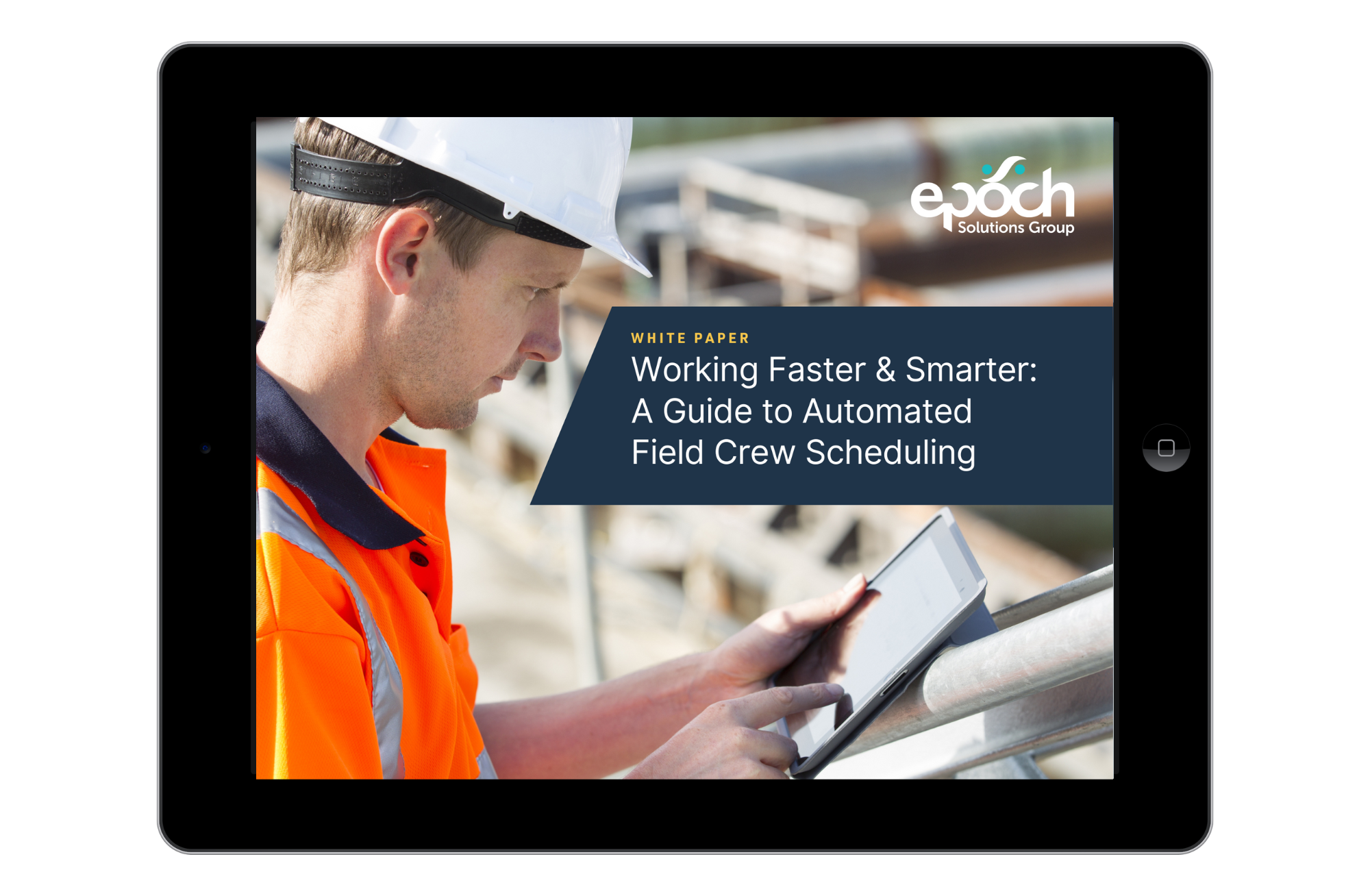
In this report, we cover the benefits of using an automated work scheduling solution to increase utility companies’ worker efficiency and productivity.

Read the guide to learn:

  • How the utility industry workforce is changing, leaving companies shorthanded and missing key institutional knowledge and skills

  • How automated work scheduling software can increase worker productivity and efficiency, allowing them to spend more time completing work rather than on manually tracking and transferring data

  • How to find the right scheduling tool for your company’s field automation needs

Download the White Paper

Gradient Navy Teal Field Workforce Management

Working Faster & Smarter: A Guide to Automated Field Crew Scheduling

Field crew scheduling is complex because utilities must coordinate large, distributed workforces across vast geographies, often with limited connectivity and mixed crew availability. Manual scheduling struggles to keep pace with real-time demands, emergency work, and regulatory requirements, making it one of the most resource-intensive and operationally critical functions.

Automated scheduling improves productivity by streamlining dispatch, reducing manual coordination, and optimizing crew assignments using real-time data. Utilities can increase field worker availability by up to 50% and reduce routine job time by 25%, enabling more work to be completed with fewer resources while maintaining operational consistency.

Automated scheduling enables faster emergency response by analyzing real-time geospatial data to identify impacted areas and determine optimal crew routes. Dispatchers can dynamically reassign crews and resources, ensuring faster restoration times, reduced downtime, and more efficient coordination during outages, storms, or infrastructure failures.

Utilities reduce labor costs by automating scheduling and dispatch processes, minimizing the need for manual coordination. Advanced systems can improve scheduler-to-crew ratios from 1:15 to 1:80, reduce overtime, and optimize workforce allocation—significantly lowering operational costs while improving service delivery and efficiency.

Utilities should look for map-based scheduling, real-time crew and asset tracking, automated work order generation, route optimization, and seamless integration with GIS, ERP, and asset management systems. Mobile access, offline capability, and configurable workflows are also essential for supporting field operations across diverse environments.

Digitizing Gas Utility Workforce Management Enhances Community Safety

Industry technology is quickly transforming, making it essential for natural gas utility companies to improve the efficiency and effectiveness of their operational workflows. One way to accomplish this is to automate and digitize the data collection process. By digitizing workforce management, natural gas companies eliminate manual touchpoints that can compromise not only the quality and accuracy of the data but also community safety.

Tracking and traceability automation solutions enhance safety measures by allowing natural gas companies to adhere to safety and environmental regulations that keep communities safe by preventing gas line-related disasters and that reduce the gas industry’s environmental footprint. These digital solutions are revolutionizing the natural gas industry, bringing deep, real-time visibility into the locations, conditions, and technical attributes of natural gas assets, information that can be easily accessed and utilized by mobile field workers who are tasked with installing, inspecting, and repairing equipment.

Contact an Epoch Sales Consultant today ⟶

The ideal tracking and tracing automation can support workflow processes allowing field workers to have remote access to asset map data and be able to work more efficiently in the field. When field workers can visually represent asset data, it increases the effectiveness and accuracy of both small, individual crews and entire services territories. Below are a few important features you want to look for when selecting your workflow automation.

  • A web-based platform to serve as a point of integration enterprise-wide for administration personnel, supervisors, and dispatchers
  • A full-featured mobile application allowing workers to conduct installation, inspections, and other routine maintenance tasks with all the data and functionality at their fingertips – on their smartphone or computing device of choice
  • Forms that can be easily configured
  • Offline functionality and high-accuracy GNSS receiver integration for easy mobile access to satellite data
  • A scheduling and dispatch engine that leverages real-time insights to expedite and simplify mission-critical workforce deployments
  • Mobile workforce management features that allow managers back at the office to dynamically track the location of field crews and quickly divert them to new locations as needed
  • Work-order management functions for easy digital planning, tracking, and management of work orders
  • Enterprise level asset management tools to coordinate essential operational processes and enable deep, ongoing visibility into the condition of remote natural gas infrastructure.

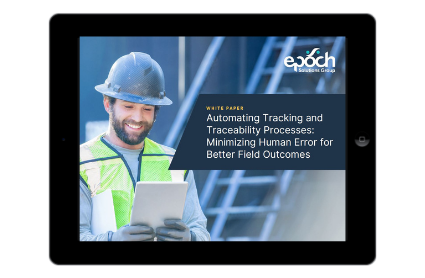
Download our latest guide, “Automating Tracking and Traceability Processes: Minimizing Human Error for Better Field Outcomes” to discover how digital tracking and traceability tools can help you lay the foundation for a future defined by greater uptime, innovation, and better protection from the damaging effects of environmental factors.

Gradient Navy Teal Work Order Management

Digitizing Gas Utility Workforce Management Enhances Community Safety

Digitizing gas workforce management improves community safety by providing real-time visibility into asset locations, conditions, inspection history, and field activity. Automated, map-centric tools reduce human error, accelerate emergency response, and support compliance with evolving PHMSA and ASTM standards—helping prevent gas line incidents and minimize environmental and public safety risks.

Tracking and traceability are critical because gas utilities must document asset materials, manufacturers, inspection history, and encoded identifiers such as ASTM F2897 base-62 asset codes. Digitized solutions eliminate manual data entry, improve documentation accuracy, support recalls and performance monitoring, and create a defensible audit trail for regulatory compliance.

A best-in-class gas workforce management solution should include a web-based administrative platform, configurable mobile apps with offline capability, GNSS-enabled mapping, integrated scheduling and dispatch, work order automation, and enterprise asset management tools. Seamless GIS and ERP integration ensures real-time synchronization, scalable deployment, and deep visibility into infrastructure conditions.

Automating Tracking and Traceability Processes: Minimizing Human Error for Better Field Outcomes

With industry technology digitally transforming so quickly, the pressure is on for natural gas companies to embrace new tracking and traceability tools as they are brought to market and to modernize their systems, applications, and organizations.

In this report, we explore how digital tracking and traceability tools are revolutionizing the natural gas industry and providing for easier, safer, and more efficient field operations.

Read the guide to learn:

  • The latest regulatory requirements affecting the natural gas industry, such as ASTM F2897
  • Why it’s important to make the investment now in automated tracking and traceability technology
  • Key features to look for when selecting a digitized workforce management solution

Download the White Paper

Gradient Navy Teal Workflow Automation

Automating Tracking and Traceability Processes

Automating tracking and traceability processes reduces manual data entry and minimizes human error in documenting asset conditions, locations, and field activities. As gas utilities face evolving regulatory requirements and increasing operational complexity, digital traceability ensures accurate, real-time records that improve compliance, safety, and overall field performance.

Digital tracking solutions create detailed, time-stamped records of asset materials, locations, inspections, and field activities. This helps gas utilities comply with regulations such as ASTM F2897 and PHMSA mandates while improving audit readiness. Real-time, standardized data reduces human error, strengthens documentation accuracy, and enhances overall pipeline safety and accountability.

Manual asset tracking increases human error, delays data entry, and creates inconsistent records. Paper-based processes and disconnected systems can compromise compliance, inspection accuracy, and emergency response. Digitizing tracking eliminates manual touchpoints, improves data integrity, and ensures utilities maintain accurate, real-time visibility into pipeline assets and field activities.

Gas utilities should look for map-centric mobile apps with offline capability, GNSS integration, configurable forms, scheduling and dispatch tools, and seamless GIS and enterprise system integration. The ideal solution supports real-time data synchronization, work order management, and scalable deployment across crews and service territories.

Automated tracking provides real-time visibility into asset conditions, crew locations, and active work orders during emergencies. This enables faster dispatch, precise network tracing, and coordinated response across multiple teams. Digital traceability improves restoration speed, reduces downtime, and strengthens safety during storms, leaks, or infrastructure failures.